Why You Should Visit Your Local Library This Summer

The summer holidays can be stressful for parents and nannies alike. Trying to find new and exciting activities to keep the kids entertained every day is no easy feat. When you consider the many rainy days experienced in the average British summertime, you might find that you and your children are going a little stir crazy.

Over the summer holidays, libraries all around the country will be pulling out all the stops kids entertained by putting on various activities including hosting character visits and read-a-longs to craft or computer sessions, and much more.

Continue reading “Why You Should Visit Your Local Library This Summer”

Double Trouble – How To Cope With Twins And Multiples

Having one baby is hard work, we all know that. The thing is, unless you have a multiple birth (or children very close in age) you don’t realise just how tiring and relentless (although extremely rewarding!) looking after two or more tiny tots can be.

So, as always, we have a wealth of top tips to help if you have your own, or nanny for, twins or triplets:

Having one baby is hard work, we all know that. The thing is, unless you have a multiple birth (or children very close in age) you don’t realise just how tiring and relentless (although extremely rewarding!) looking after two or more tiny tots can be.

So, as always, we have a wealth of top tips to help if you have your own, or nanny for, twins or triplets:

  • Routine is king. This, of course, applies in theory to all babies. You’ll find it is much more necessary with twins. Make sure you put the babies down to sleep at the same time, and try to feed them at the same time (or one straight after the other). Even of one cries for food whilst the other is sleeping, in the first couple of months it can really help to wake the other one to feed as well.
  • Togetherness. If possible, keep your babies together, whether this is in the same cot or just in the same room. Twin babies are almost always comforted by knowing the other one is nearby, and having physical contact with each other. They’ve had nine months of sharing everything, so it would be a massive adjustment for them to then spend a lot of time, or sleep, without the other.
  • Support system. It’s important to get as much help as you can as a parent of twins. If your partner has returned to work and you find yourself alone and incredibly stressed, pull in your support network. Ask relatives and friends or regular baby-sitters to provide relief, if you haven’ got a nanny. Remember that it will be easier for anyone to help you if you suggest specific tasks, such as feeding or bathing one of the babies, taking them out for a stroll, shopping, cleaning the kitchen, or preparing a meal.
  • Get some ‘me’ time. It’s important to have a little bit of time each day, if possible, to relax. Even if it’s a 20 minute bath when your partner gets home from work, or half an hour of reading before you go to sleep. It’s a fact that stress and anxiety are more common in parents of twins, so making sure you grab a few golden moments of time for yourself is key.

For more help and information on twins and multiple births visit Twins Trust | Twins Trust – We support twins, triplets and more…

Perfect Summer Holiday Activities for Children

British summertime is often unpredictable when it comes to the weather. It’s not unheard of to experience rain, sun, wind and even snow all in the same day. That’s why we’ve put together our top summer holiday activities for kids that you can do, no matter the weather.

British summertime is often unpredictable when it comes to the weather. It’s not unheard of to experience rain, sun, wind and even snow all in the same day. That’s why we’ve put together our top summer holiday activities for kids that you can do, no matter the weather.

Continue reading “Perfect Summer Holiday Activities for Children”

Lifestyles of the rich and the famous

Many nannies dream of working of a VIP or even celebrity family. It’s a hidden world where nannies sign extensive confidentiality and non-disclosure agreements* but get to travel in private jets, stay in 5* luxury and get designer handbags as bonuses. Take a peek inside and meet The Royal Nanny, The Super-Wealthy Nanny and The High Profile Nanny.

Many nannies dream of working of a VIP or even celebrity family. It’s a hidden world where nannies sign extensive confidentiality and non-disclosure agreements* but get to travel in private jets, stay in 5* luxury and get designer handbags as bonuses. Take a peek inside and meet The Royal Nanny, The Super-Wealthy Nanny and The High Profile Nanny.

What’s it like day to day?

The Royal Nanny: I wake the children up and supervise them getting dressed and so on in the morning. Then we go down to breakfast, which is prepared and cleared away so I don’t have to do anything, which is amazing! I usually talk to the kitchen staff about lunch and dinner while the children are eating and any other staff who will be involved in the day. After breakfast if the children’s mother is around we’ll go and see her for up to an hour and then we might spend time in the gardens, at the pool or inside doing some structured activities. It’s difficult to do normal things in the compound but I try and organise some time in the kitchen every so often so we can bake, for example. Often there are cousins around so we might play with them. After lunch it’s time for a rest, and then the afternoon is the same as the morning, but we’re more likely to go out if the children’s mother wants to. Dinner is eaten later than I was used to, and then I supervise bedtime. After that I report to my employers on what we did that day and I’m off duty until the next morning. We travel quite a lot and then I find we all work a lot more, which is annoying because it’s easier to go out when you’re in a big city!

The High-Profile Nanny: It’s really normal! Sometimes the kids are up when I get there, sometimes they aren’t. I do breakfast, tidy up, gather up school shoes and reading bag and anything that needs to go back to school and do the school run. Then there’s usually toddler group, Gymboree or a playdate in the morning, back for lunch and nap while I get nursery duties done before going back to school, running round any after school activities or playdates, home for dinner and bath and by then one of my bosses is usually home and I leave!

The Super-Wealthy Nanny: I work 24 hours so anytime the littlest one wakes in the night I get up. We all have to be up by 7.15 and get ready for the day. Usually the housekeeper prepares breakfast so all we have to do is go downstairs and she tidies up too so once breakfast is done we brush teeth in the downstairs bathroom and it’s straight out the door to school. The older ones are responsible for their own school stuff, just because they’re really rich doesn’t mean they can’t start taking responsibility for themselves. The driver takes us to school and then to whatever activity the little ones are doing. The days are actually really busy because they do a lot but it’s never just me so some days I’ll pick up both the older ones from school and plan something for everyone but twice a week the oldest has something after school so the driver goes back later and I stay with the other three. It’s tough to organise going to play with friends because of the security. Sometimes I feel a bit awkward saying that my charge will be accompanied by a bodyguard! When we got home we have to fit in homework and music practice and so on. My bosses definitely expect to see results from what they pay for so the children work hard. I don’t have to worry about dinner because either the housekeeper prepares it or we have something from the freezer. I try to have everyone in bed by 8.30 because it’s only when they’re down that it’s my time! We have a duty bedroom in the main house where we stay but if it’s changeover night then the other nanny will arrive about 6 and I can go to the place we share, or go out!

What has been your best experience?

The Royal Nanny: There have been loads but staying on a private island was probably the best.

The High-Profile Nanny: Just my boss saying thanks for keeping the kids safe and letting them have a normal childhood. It made me feel like I was doing my job right.

The Super-Wealthy Nanny: It was when the family just arrived in London and my charges had no toys. The mother drove us to Hamleys and told me to buy anything I wanted for them. I don’t know who was more excited – my charges or me!

What has been the worst experience?

The Royal Nanny: Accompanying my employers and the children to a major event and being caught up in a security breach. It was terrifying. I honestly thought someone was coming after the family I work for.

The High-Profile Nanny: The first time there was a big news story involving my boss – I was convinced everyone I spoke to was a journalist waiting for me to say something stupid.

The Super-Wealthy Nanny: Getting lost in one of their houses. I was only going to the kitchen to get some bottled water and I was gone for 20 minutes when I thought I’d be 3, tops. I came back to find my boss in the playroom looking really puzzled by why I’d been gone so long. I tried to explain what had happened and she just made me feel like a worm. I didn’t leave my charges alone – there was someone else there – but neither of us knew the house and I thought I knew where I was going, except I didn’t! I still don’t really get what I did that was so wrong because I think I’ve messed up worse other times but that time it was the reaction that made it really bad.

What was the biggest change for you?

The Royal Nanny: It was the formality and learning all the rules. There are rules about who you can and can’t speak to if they don’t speak to you first, what you have to call them, whether you’re expected to curtsey in public and so on and then you have to remember what you have to teach the children because the rules are different for them. There are even hierarchies in the household servants and between the other nannies, which is a bit crazy.

The High-Profile Nanny: Having to be really, really careful about media attention.

The Super-Wealthy Nanny: Working in a team with another nanny. Luckily we really get along, but when I started they just had me during the week and a weekend nanny who came daily so it wasn’t too different to a normal job, except instead of the parents letting my charges watch too much TV it was the other nanny! Then it changed so we work 4 days on and have 3 off, and sometimes we work 7 days straight, or on holiday it’s usually half days. It all gets a bit complicated because it’s our responsibility to work it out and make sure there’s always someone there. But when we first started with this system we weren’t communicating well so stuff for school got forgotten or one would arrange a play date for the other’s day and not say anything.

Do you really travel by private jet, stay in 5* hotels and get a designer handbag as a bonus?

The Royal Nanny: We have sort of travelled by private jet and if we stay anywhere that isn’t family or friends then it’s 5* but I’ve never had a designer handbag bonus.

The High-Profile Nanny: No, not at all! I work for a totally normally family where one of my bosses just happens to have a job that’s in the papers a lot. I would love a designer handbag…

The Super-Wealthy Nanny: Yes, we do. I got a gorgeous handbag for my birthday last year. I’m such a cliché!

What piece of advice would you give anyone who wants your job?

The Royal Nanny: Put time into acquiring skills and qualifications that will make you fit in with their lifestyle and simultaneously allow you to deliver top quality care. Most nannies I meet have some kind of teaching experience, especially for older children, because a big part of the role is preparing the children for school, or possibly even educating them at home.

The High-Profile Nanny: Develop a really thick skin. People will say all sorts of things about you and your employers because they’re in the public eye and it can be hurtful to hear or read it, especially when it isn’t true. You have to put it out of your mind because the children come first.

The Super-Wealthy Nanny: Don’t let the way they flash their cash make you feel embarrassed. It can seem really over the top at first, and I suppose it is, but you’ll be hanging out with other people who find it normal so you’ll stick out more if you look uncomfortable.

*no confidentiality agreements were broken or harmed in any way in the production of this post

Flying With Small Children: An In-Flight Survival Guide

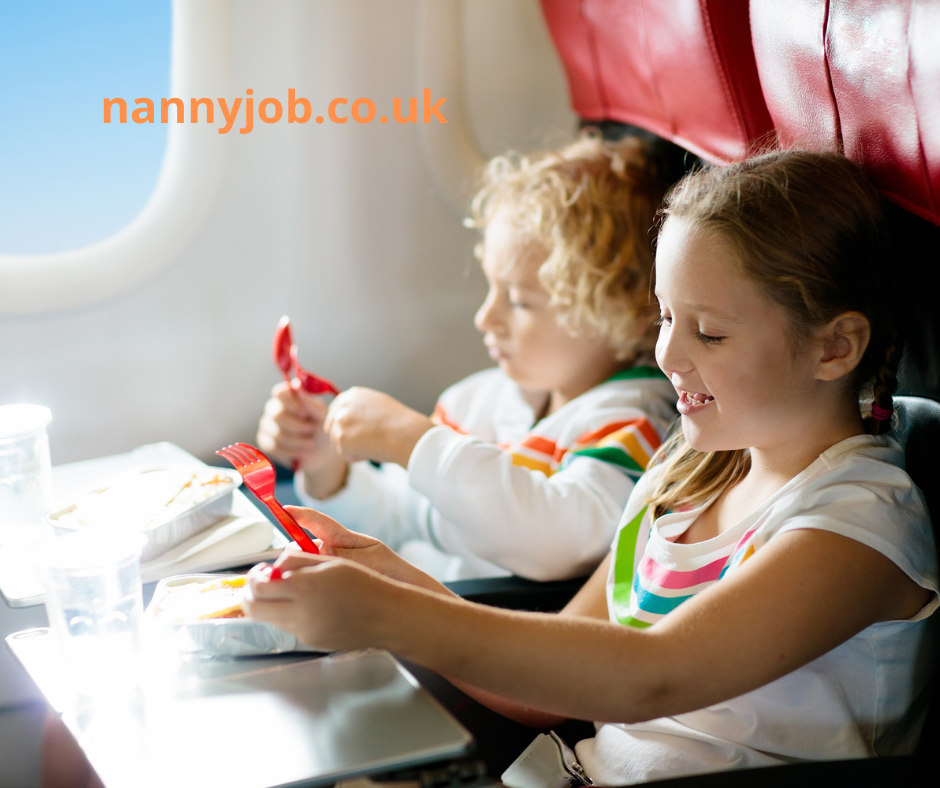
A recent short trip abroad is all it takes to remind me of how difficult it can be travelling with little ones! The last thing any family or nanny wants is to have attention drawn to a restless toddler or crying baby, but as we all know we’re generally on a knife’s edge between a calm flight and a stressful one with small children.

A recent short trip abroad is all it takes to remind me of how difficult it can be travelling with little ones! The last thing any family or nanny wants is to have attention drawn to a restless toddler or crying baby, but as we all know we’re generally on a knife’s edge between a calm flight and a stressful one with small children.

If you’re a nanny and have to travel with babies or young children in your care, we have put together a survival guide to ensure that you don’t become the person in charge of ‘that annoying child on the row in front’, and possibly even have an enjoyable flight!

  • Prepare beforehand – when the flights are booked, if possible make sure that you request the front row of seats, so that you have more leg room. The child has more room to move around on the flight, and will not be annoying anyone in front by pulling on the backs of seats.
  • Nap time – if you have a child in your care who is good at taking regular naps, try to ensure that flights are booked and taken at nap times, so that the child is more likely to want to sleep on board.
  • Choose toys wisely – in other words, use your common sense on this one and don’t take large toys that will take up too much room, or small toys with lots of fiddly bits that will end up getting lost. A few simple toys which pack lightly and tightly are best, and a small comfort blanket instead of large items.
  • Concentration spans – a very helpful Nannyjob Facebook fan informed us that children have 1 minute of concentration per year of their age, so if the 3 year old in your care is finding the window shutter more interesting than her Barbie after 5 minutes, don’t expect her to be any different, and go with her concentration, don’t force it.
  • Be self sufficient – prepare yourself before the flight so that you aren’t going to be relying on airline staff to help you entertain or calm the children. They are busy enough and it isn’t in their remit, so don’t get stressed if the cabin crew overlook your crying toddler whilst serving your in flight meal – they just have a job to do.
  • Travel light – we’ve all seen those families who seem to be carting everything and the kitchen sink on board, and are more stressed before take off just from lifting and carrying than actually having little ones with them. Only take essentials for both you and the children, and to make these essentials light ones!
  • Distraction works! – Let’s face it – spending hours on end in one place is going to get a bit tedious for the most well behaved little one, so remember that for those hours it really is down to you to become the key source of distraction! If you sense a toddler becoming irritable and bored, get your creative hat on, become the circus, and think of a totally new thing to sing, play or do! You’ll be amazed what new games come out of a flight!
  • Don’t apologise – children cry, children get frustrated and bored – it is not your fault, it’s what happens! If you see that smug couple with no children on the row behind tutting at this, then totally ignore them and stay strong.
  • Be aware of ear pressure – This can be a really big deal. As someone who has suffered from ear pressure pain on flights since childhood, I totally empathise with the crying children I hear on flights when coming in to land. The only thing that works for me is a certain well known brand of sinus pressure pain and nasal congestion relief, which literally wipes the pain and pressure away like magic, and has started doing it’s own range of children’s products.

Do you agree with our ideas? Why not share your experiences on our Facebook wall?

Taking Care of Yourself: Tips for Child Carers

The job of a child carer is a demanding one; mentally, emotionally and physically. We love our jobs, working with children is exceptionally rewarding, but if we’re not careful, we can suffer from stress, burnout and exhaustion.

We’ve put together some top tips to help keep you healthy and in tip-top shape to ensure that you and your charges receive the best care!

Continue reading “Taking Care of Yourself: Tips for Child Carers”

When and how to potty train

Summer is a great time for potty training, and if school is approaching in the autumn and your soon-to-be Reception child is still clinging stubbornly to nappies it’s the last real chance before September.

There are 3 things to consider before you start – age and readiness, timing, and method.

Continue reading “When and how to potty train”

Taking risks

Risks, in general, are seen as a bad thing. Parents and child carers are told to minimise risks, to make things safer, to always be careful and pay attention, ready to swoop in the moment there’s danger. But what if this is a bad thing? Are we going to far?

Of course we don’t mean giving children uncooked chicken to eat, or letting them practice their new found cycling ability next to the river, we mean sensible risks. Perhaps instead of removing all the hazards teaching children to respect dangers and deal with them safely would help them lean. instead of hovering and catching children before they hit the ground allowing them to fall from a safe height and feel the effect of letting go and the point where they went too far.

Continue reading “Taking risks”

Taking your child to work as a nanny

More and more nannies are looking for jobs where they can take their own children with them. It seems like a perfect compromise between working and having time with your children, and increasing numbers of families are happy to reduce their costs a little bit – or get more for their money – by accepting a nanny who wants to bring her own child to work.

The law

A nanny can care for children from up to 2 families at once, and that includes her own children. So a nanny based at an employer’s home is able to take her own children along. Doing a nanny share and taking your own child is not allowed unless you register with a OFSTED as a childminder on the Early Years and Childcare registers. Registering on the voluntary register as a Home Childcarer, which is what OFSTED call nannies, isn’t enough. Nannies, however, don’t have to comply with ratios so can care for 2 babies or 4 children under 5.

Continue reading “Taking your child to work as a nanny”

Working overseas

Almost every nanny at some point flirts with the idea of nannying overseas. British nannies are sought after from Paris to Monaco, Dubai to Washington and salaries can be far more competitive than staying in the UK. There are several ways to go about finding a job overseas.

Almost every nanny at some point flirts with the idea of nannying overseas. British nannies are sought after from Paris to Monaco, Dubai to Washington and salaries can be far more competitive than staying in the UK. There are several ways to go about finding a job overseas. One option is work as a ski or summer holiday nanny in a resort. The advantage of this is that you have a team of other nannies around you and everything is taken care of by the company. The disadvantage is that you often don’t get to experience local culture and you may find yourself also working in a creche or nursery setting as well as with a family. If you’ve never worked as a nanny before this can be a great transition. You could also work for programmes such as Camp America for a season which will enable you to work in the US.

Alternatively you can find yourself a job with a family either through an agency or responding to a private advert. As with all private adverts it’s very important to make security a top priority. Ask the family for references and be wary of scammers. Book flights yourself and be reimbursed rather than giving the family your personal details and look up the details for the consulate in your destination country. Hours can be long and expectations high, and if you find nannying in the UK isolating you may want to avoid cities which don’t have a large nanny, au pair or expat community. Most overseas jobs are live in and it can be easy to find yourself spending evenings and weekends in your bedroom skyping your friends or catching up on Facebook instead of getting out and making the most of a new country.

If you are young and single an ideal way to try out working abroad is as an au pair. Although au pairs are paid far less than professional nannies and do fewer hours it is much easier to find a job, and once you have a reference to prove that you coped working abroad once you will find it easier to get a nanny job overseas. One of the other big differences between nannies and au pairs is the type of visa required. If you are an EU national you can work anywhere in the EU without needing a specific visa, however some countries have rules about what an au pair can and cannot do and the maximum and minimum rates of pay. British nationals can also get working holiday visas to countries such as Australia which will allow you to work temporarily as a nanny. To go to the US, however, the easiest way is to go as an au pair on a J1 visa. Many nanny jobs in America wanting a British nanny are actually advertised as au pair jobs so talk through the job carefully and know what you are signing up for.

A contract is an absolute necessity, particularly if you don’t know the language of the country you are going to. It is much easier to get a translation of a contract in your language or your employer’s than relying on verbal communication. A contract also means you have legal protection for your hours, duties and pay. Most employers treat their nanny well and provide not only accommodation and food but also a local mobile phone, help with administrative formalities and introductions to other local nannies or au pairs.