Food For Thought: How To Encourage Healthy Eating

As a nanny one of your most important duties is to make sure the children in your care eat properly. This may sound simple enough, and parents may take it for granted that you will make sure their child eats well, but what happens if you find yourself face to face with the fussiest eater you’ve ever met – in the form of the small child in your care?!

It can be a real worry if a little one will only ever eat when or what they want to. It could be that parents do not experience this with their child, and the child may be trying to exercise an element of control over their environment when in your care. Having personally nannied for a 5 year old who only ever wanted jam sandwiches, I know from experience how frustrating it can be – but fear not, this did change over time, as he started to put more trust into the slightly more unfamiliar things in all areas of his life.

As always we are here to share our top tips if you find yourself in this kind of situation:

  • Don’t make it a big deal! Inwardly, you might be screaming, but try not to let the child see that this bothers you so much. Depending on the reason for the fussiness, the child may feel like they have ‘won’ if they see it bothering you, or in other cases they may start thinking there is something wrong with them – neither situation is good, so keep cool and very slowly over time start encouraging them to eat more / other things. The calmer you are about it, the more likely they are to be calm and compliant too.
  • Get them involved. It’s a known fact that a child is twice as likely to eat a meal that they have helped to prepare. As well as being educational and fun, getting a child to safely help out with food preparation will help improve their relationship with food. Start with taking them grocery shopping, so they can see the whole process from the start, and start to see it as fun.
  • Appropriate portions. We all know what it’s like when presented with a large and over facing meal. The immediate reaction is to feel a negative connotation with the meal and feel as though you can’t eat it before you even start. Well, this is the same for our smaller friends! You may think you’re doing them a favour by trying to get them to ‘eat it all otherwise no pudding’, but this is often the wrong way to go about things. Limit portion size, so that the child is not over faced, and they will feel proud of themselves for finishing a (much easier to manage) meal.
  • Timing. Make sure you only go about introducing new foods at appropriate times. A good example of this is if a child is hungry and / or rested or in a good mood. They are far more likely to try something new in this case. Also, make sure you only ever introduce one new thing at a time, again so as not to over face the child.
  • Mix it up. If you really want to introduce a certain food group that you know won’t be accepted too well by a fussy child, try introducing it at the same time as serving a favourite food. This will make the child more likely to try the other food on his plate as well as his favourite. If he ignores the new food, don’t fuss, just quietly try again next time.
  • Lead by example. It may help to actually sit and eat the same meal that you are trying to encourage, with the child. As we know, children like to imitate, and if you make sure that you, the child, and any siblings get into the routine of eating the same things, together at the table, then it often helps to encourage the fussy child to eat the same.

 If you are finding that the issue seems to last for a really long period of time, it may be that there is a deeper rooted problem, and consulting a doctor or dietician is advised.

Oh brother! How To Handle Sibling Rivalry…

Sibling rivalry has existed as long as families. Think back to Biblical times and Joseph’s problems with his brothers, or of the horrible time Cinderella had with her stepsisters!

In some cases, right from the moment a younger child is born a sense of rivalry is evident, with one or more child feeling the need to fight for the attention of a parent or nanny; or be more successful at certain games or classes, whether they have been given any real need to or not. Other siblings develop this later on, when school, sport and activities become more a part of life, and of course, there are lucky families where there is no sign of any of this at all.

Of course, each child is born with a natural rite of passage to find their niche within the family dynamic. We usually expect this to happen fairly naturally, and even if we do everything we can to encourage individuality and peaceful relationships, this doesn’t always run as smoothly as we would like. We tend to think that children are blank canvases in many ways, but just like adults, they have personality traits unique to them and which can clash with those of others.

Spending most of their time with their siblings in the early years, it doesn’t take much to work out that this can be where these clashes start to occur. According to child psychologist Sylvia Rimm, sibling rivalry is particularly intense when children are very close in age and of the same gender, or where one child is intellectually gifted.

So how do we deal with siblings who see themselves as opponents in some way? And how do we make sure that sibling rivalry doesn’t develop into a horrible case of adult envy? Whether it starts in early childhood or later on, here are our top tips:

  • Avoid ‘labelling’ – it’s a difficult task praising one child whilst trying not to make another feel left out, but try not to use labels for each child, e.g ‘the sporty one’ or ‘the naughty one’. You can bet your life that the siblings of each of these will automatically feel like the total opposite, i.e. bad at sports and therefore inferior, or more well behaved and therefore superior. Labels simply add fuel to the fire of sibling rivalry.
  • Look at your own relationship – what example are you showing your children? Do they witness you and your partner rowing or criticising each other? If this is the case, you can’t expect your children not to do the same. They see this behaviour as normal, and are confused if you pull them up on it whilst doing the same thing and getting away with it. Don’t show your child how to be a hypocrite – try to put more positivity into your own relationship and you’ll see a change in theirs.
  • Encourage teamwork – by encouraging siblings to work together projects, you’ll increase the strength of the bond between them. Try to set them a little task every day together, which takes concentration and will hold their interest. If it’s time to put toys away, set the clock and get them both to race against it, instead of against each other. For sporty older kids set up a football game where they play together against other children on the street. Get ‘girlie’ sisters to create a beauty therapy centre at home where they both give you equal amounts of treatments together, meaning they get the best of your attention and help each other at the same time. The chances are they’ll get so engrossed in doing these tasks right that they’ll be on each others side for a while afterwards.
  • Show them the difference between fairness and equality – if a younger child is upset because the older one gets to stay up longer, explain that this is fair because of the age difference. They are still equal, and remind the younger one of fair privileges that they get for being younger, for example not having as much homework to do. If they can grasp this and be reminded of it, you’ll hopefully hear less of the old ‘it’s not fair!’ from now on!
  • Set aside “alone time” for each child.  This is so important. Whether you’re a nanny or a parent, make sure you set at least a few minutes most days for one on one time. It’s amazing how much even 10 minutes of uninterrupted one-on-one time can mean to a child, and this can be a perfect time to encourage the child to talk to you about the things that they love about their brother or sister, whilst giving them the praise and attention that they need themselves.

These guidelines will hopefully help to make life easier for parents or nannies looking after siblings with difficulties. If you feel that there is more of a deep seated issue, it may be worth contacting a child psychologist who will be able to help further.

Do you agree with our ideas here? Either way, we welcome your comments on our blog and of course via our very active Facebook page …

Story Time: Why is it So Important?

Did you know that 20% of UK parents spend no time at all reading with their children? Or that just 50% of parents with young children read for just 1 hour each week?

Not only does reading to your children help to improve their academic performance, but more importantly it strengthens your bond, improves their imagination, helps children learn to read, teaches them about the world around them, and provides important morals to help make your child a nicer person.

Continue reading “Story Time: Why is it So Important?”

Blue Monday

Today is Blue Monday, supposedly one of the most depressing days of the year, based on the weather, debt, time since Christmas, lack of motivation and many other factors. Undoubtedly, we probably all feel a little low at this time of year for a whole host of reasons. But for those people that genuinely suffer with depression every single day Blue Monday is just another day to them.

Depression in adults is a condition we’re all familiar with. Most adults have at some point felt mildly depressed and a surprising proportion of the population has suffered from clinical depression, whether treated or not.  Although there is still a huge stigma around saying that someone as an individual is or has been depressed, it’s no longer the hidden condition it once was. Depression in children and teenagers, on the other hand, is much less widely acknowledged but potentially very serious.

What on earth do children have to be depressed about?

We may cast our minds back to the halcyon days of our own childhood and wonder what there is to become stressed and depressed about but firstly childhood was never that simple and secondly today’s children are facing an infinitely more complex world with shifting social norms, advancing technology and mounting media pressure. In Hollywood everyone is popular, rich and happy, the guy always gets the girl and we all live happily ever after. This can set up dangerous expectations for real life and if children can gorge on this constructed reality, they can end up feeling like they’ll never be good enough. If we’re honest with ourselves we were all anxious about school and schoolwork, keeping up with our friends and living up to parental expectations and today’s children are no different, even though the challenges they face are. It becomes more complicated when children become adolescents because the maelstrom of hormones, which leads to tears, tantrums, rage and rebellion, can mask depression – it all gets put down simply to being a teenager. It’s especially important at this time to watch out for anything out of the ordinary which continues over a lengthy period as it may point to a deeper issue.

How can I spot depression?

Knowing what is normal for your child or charge is key, and that can only be achieved by keeping the lines of communication open. It’s difficult when your efforts are met with angry rejection but keep letting them know you’re listening and do genuinely listen to what they say even if it seems insignificant to you. A constant refusal to communicate may be a sign that something is troubling them, but they don’t know how to talk to you about it. In this case be guided by your instincts and you may need to seek professional help along with your child. Although it may feel like a betrayal at the time, a child will get over that faster than untreated depression.

Surely my child is too young to be depressed.

 In fact, depression can hit children as young as 2 or 3 years old so there’s no such thing as too young. The number rises sharply in adolescence, with girls twice as likely to suffer as boys at this point. Rest assured, depression in very young children is likely to be the result of physical or emotional trauma and rarely manifests in healthy children with a secure attachment to their parents. Children who are at risk of depression, be it from chronic illness or emotional disturbances in their life, are likely to be offered additional help, perhaps in the form of play therapy or counselling.

That said, although depression in children is rare it’s important to remember that it does still exist and shouldn’t be discounted because of age.

How can I prevent depression?

There is no one way to prevent depression but setting an example of a healthy, realistic lifestyle is a good start. Plenty of exercise and fresh air along with a good diet will help keep the brain’s chemistry in balance and ensuring plenty of time for relaxation and play is vital for relieving stress. Good communication skills lay the foundation for open and honest exchanges about emotions and will safeguard your relationship throughout the difficult teenage years. It’s never too early to talk to children, be honest with them and accept them for who they are, encourage them to express their feelings and give age-appropriate explanations for what they see in the world around them.

Get into the habit of looking for the good in life. At the end of the day encourage children to focus on the good things that have happened and consider encouraging older children who don’t want to be tucked in any more to keep a positivity journal. The act of reflecting on what has gone well prevents a spiral of negativity and a journal can be a source of encouragement when times get tough.

For more information please visit www.youngminds.org.uk

What are the regulations if nanny is a student?

If nanny is a student, they will still be subject to paying Tax and NIC on their salaries like normal workers if they earn above their personal allowance, which for the current tax year (19/20) is £12,500.00 gross per annum (£1,041.67 gross per month).  If nanny’s earnings are below this threshold then they will not be subject to tax deductions on their salaries.

Nannies over the age of 16 will need to have Employee National Insurance deducted.

Nannies who are students and come from overseas will not be able to get a National Insurance refund if they return home, even if they work in the UK for a short period of time.

The only way a foreign student nanny could get exemption from National Insurance is to produce either an A1, E101 or E120 certificate from a European Economic Area (EEA)

If your student nanny leaves the UK to return to their native country during the tax year, they may be able to claim back some or all of the Tax which they may have paid on their salary in the UK.  They would need to complete and return a form ‘P85’ to HMRC, including parts 2 and 3 of their P45 from their current employment. If nanny, has worked in the UK for a full tax year, then they will not be able to claim back the Tax which they have paid on their earnings.

The P85 form can be obtained by contacting HMRC directly.


https://www.gov.uk/tax-right-retire-abroad-return-to-uk

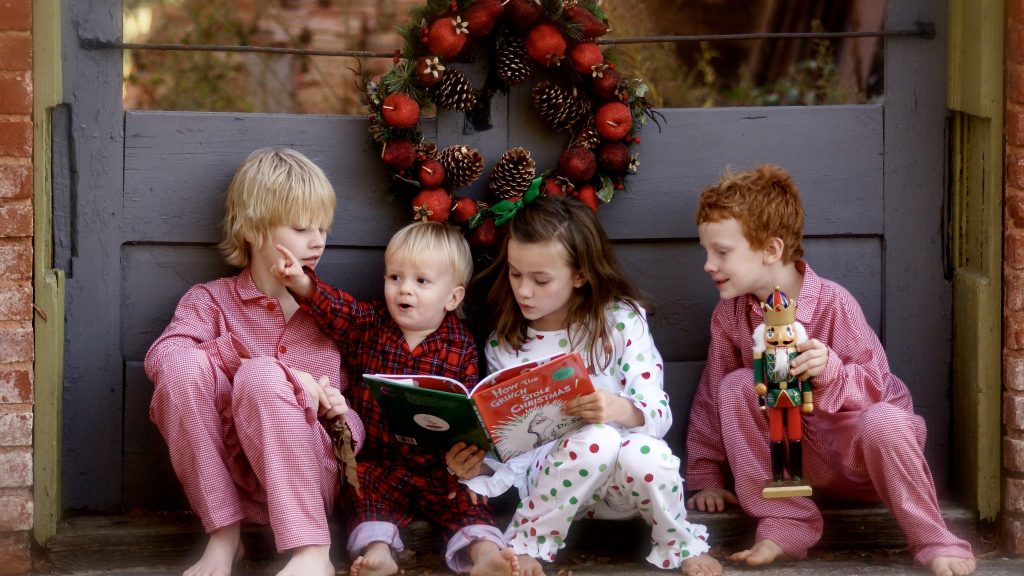
Get into the Christmas spirit with our top 5 festive books for children

Christmas is the perfect time to rekindle your child’s love of books and reading.

Children’s Christmas books are filled with happiness, wonder and strong morals. Reading is a simple, easy activity that can be enjoyed by children of all ages, no matter the weather.

Encourage them to learn by reading aloud or helping them to read along.

What are you waiting for? Pick up a book today and spark their imagination.

See below for our recommended top 5 festive children’s books!

Continue reading “Get into the Christmas spirit with our top 5 festive books for children”

Ofsted Courses

Paediatric First Aid

 As a nanny you will be looking after and caring for young children. This course is aimed specifically for first aid in relation to children and will include –

​Bleeding Cuts and Grazes, Broken Bones

​Shock, Anaphylactic, Electrical

​Choking, Resuscitation

​Allergic reaction, Head Injuries

Common Core Skills for a Nanny

This course is aimed at helping nannies develop and enhance their work experience and knowledge of working with children and their families and will include –

 Communicating with children, young people, their parents and carers

​Child and young person development

​Safeguarding and promoting the welfare of the child

​Supporting transitions

​Multi-agency working

​Sharing information

SCHOOL READINESS

And just like that, the summer holidays are over! For some, sending the children back to school couldn’t come any sooner. You’ve faced the high street, waited (patiently!) with your ticket to try on new school shoes, hair has been chopped and styled, new stationary has been bought (for them and you!) and your diary is ready to go… but what about the children. Are they ready? Are they excited and prepared?

It’s easy to assume the children are also ready to go back, see their friends and fit back into the school routine. But what about their emotional readiness? What about the children who are starting at nursery or school for the first time? The ones transitioning to primary or secondary school. Even the difference in classroom, teacher or timetable can be overwhelming for a child.

Transitions work best when a child is prepared. So what can we do to prepare a child for the September ‘back to school’ time in their lives?

Firstly, talk to them. Ask them how they are feeling. Don’t just put the emotions you are feeling into their minds. Really listen to their anxieties, worries and excitements. Break down each one and show them emotional support. Not just at the start of school, but continued throughout their first few weeks, and beyond if needed. Sometimes they won’t want to talk, and that’s ok! Just being there, listening and allowing them the opportunity to open up will give them reassurance.

Another thing you can do to get them involved is with the new term shopping! If they have a say in what bag, coat and shoes they will be wearing, then they are going to show a little more enthusiasm. For young children, finding a school bag with their favourite character on is going to help massively. For older children, it’s ‘fitting in’ with peers, so they will want a say in how they look.

One of the biggest anxieties about starting at a new school can be around friends, or not knowing anyone. To prepare children for this, I always advise trying to find other children also attending the same school (try local social media groups). Planning play-dates before school starts will give them someone they are familiar with. In the first few weeks of term, plan after school tea times together too. This will really help them build on friendships and relationships with other children, and as parents and nannies, also introduce you to other families from the school.

And lastly books! Reading is something that you can do together with your child. Books can help with no end of matters, and school readiness is one of them! Pop along to your local library, find some books about going to school and read them together. Change the words to fit in with the name of your child’s school, or teachers to personalise it, and just spend some time one to one discussing everything around school.

With everything, time helps. Enjoy this period in your child’s life, support them, reassure them and allow them the time to adjust to these new beginnings.

We cover all sorts of transitions that happen in a child’s life, including school readiness in our Early Years Care and Education Course. Please contact Little Ones Training and Education on 0207 112 8057 to find out more!


Hypnobirthing

Recent years have seen a soar in the popularity of Hypnobirthing. Perhaps once thought of as a bit ‘woo’ or ‘hippy’, more and more expectant parents are now tapping into the mind:body connection and learning simple yet powerful relaxation techniques to prepare for their baby’s birth.  So, what are the benefits: –

Hypnobirthing increases/improves

  • Confidence for pregnancy and birth (for mum-to-be AND her birth partner)
  • Flexibility during labour and birth
  • Informed decision making
  • Relationship with midwives/doctors
  • Higher Apgar score
  • Bonding with baby
  • Ease of breastfeeding
  • Smoother transition to parenthood

Hypnobirthing reduces:

  • Fears, anxieties and tension
  • Need for medicated pain relief
  • Requirement of medical intervention
  • Length of labour
  • Caesarean rates
  • Length of stay in hospital
  • Recovery time after birth
  • Incidence of post-natal depression

How does it work?

A Hypnobirthing course can be seen as a complete birth toolkit. It teaches simple but specific self-hypnosis, relaxation, breathing and massage techniques for a safe, calm and gentle birth. Simply put, the more relaxed and calm you can be in labour the more in control and positive you will feel.

Hypnobirthing also helps dads and other birth partners understand their role and feel confident about the practical and emotional ways they can support their partners.

It is for all types of birth?

Yes! The techniques are invaluable regardless of the setting, or the way in which your baby enters the world. In fact some of Hypnobirthing’s greatest advocates are those who, for varying reasons, had surgical births. The techniques that they had learned equipped them with the tools they needed to relax, remain calm, and enjoy a positive experience where they still felt in control.

The very point of the techniques is that they work when things are going ‘to plan’ as well as when things may take a turn ‘off plan’: what happens during your birth experience is less important than how you feel about what happens.

Whilst Hypnobirthing doesn’t promise a natural pain-free birth, it does give you the best possible chance of having a straight-forward, vaginal birth, and an experience that you will remember with only positive memories.Sarah teaches in Reading Berkshire. She has worked with many couples to transform their mindset from feeling apprehensive and fearful to feeling prepared, supported, relaxed and excited, and go on to enjoy a birth experience that is positive, empowering and calm.

  www.happybirths.net

My Mood Stars

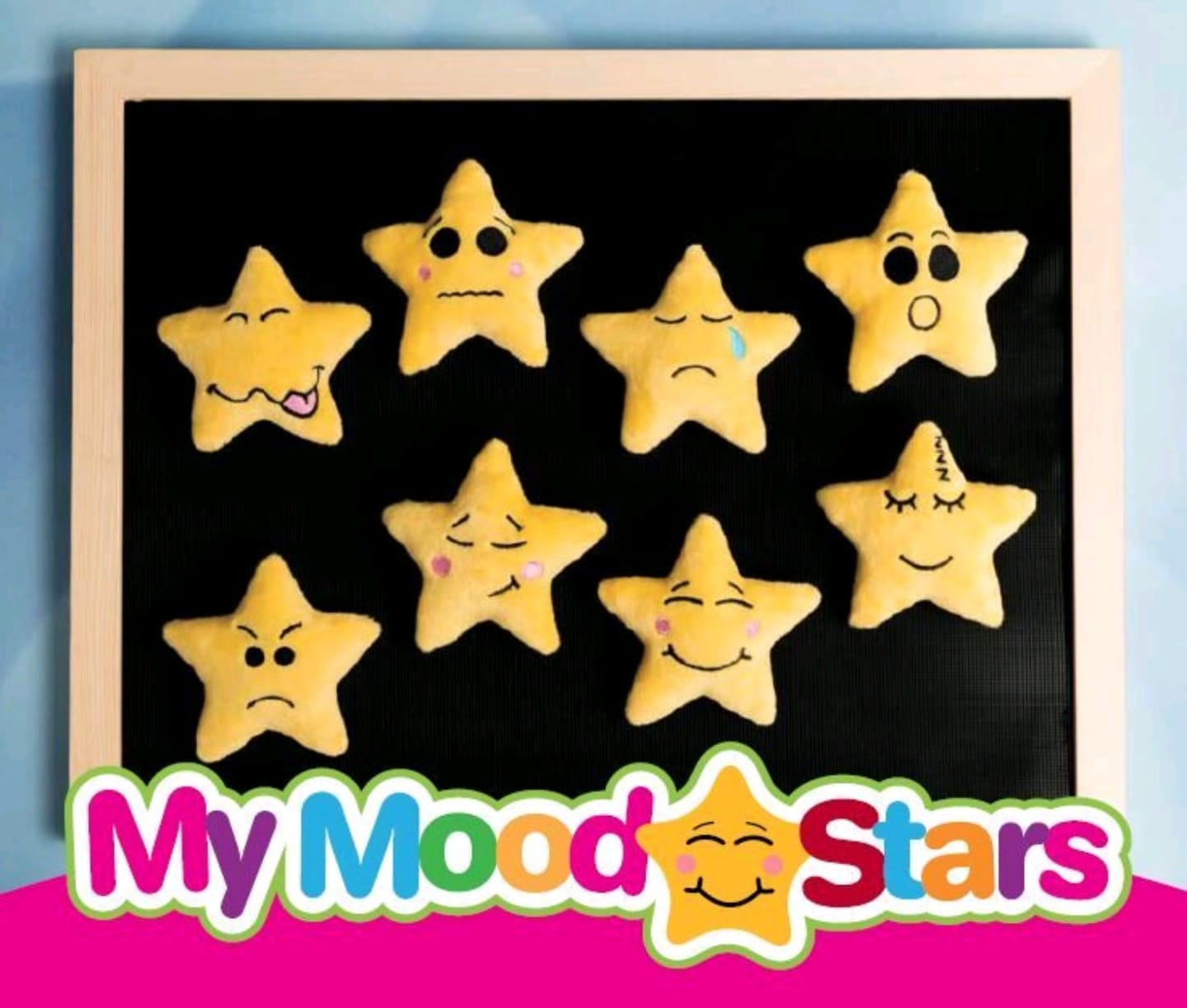
Nannyjob are always keen to discover great ideas to encourage child development and we are really impressed with these fantastic My Mood Stars. The idea was thought up by former Childminder Wendy Elizabeth White and in the early stages of development her keen needlework skills came in very handy!  Each yellow star filled with cotton depicts an emotion. There is sad, happy, angry, scared, shy, silly, surprised and sleepy.  We all know that the ability to express and control our emotions and to recognise them in others is an essential skill.  However, for some children trying to communicate feelings can be difficult and frustrating.

Self-confident children in touch with their feelings find it easier to flourish in social situations. Indeed personal, social and emotional development and communication are key aspects of the Early Years Foundation Stage in the UK. Children who understand and can express and manage their own emotions, as well as those around them, are more likely to develop a positive sense of self and be assured and inquisitive learners and these Mood Stars are a great way to encourage conversation and expression with your little ones. For more information please visit.

www.mymoodstars.co.uk

Twitter – www.twitter.com/mymoodstars

Facebook – www.facebook.com/mymoodstars

Instagram – www.instagram.com/mymoodstars41